Bold: Local Chat & Date
Robo TechnologiesSocial
4.7115.00 Reviews
- Version
- 1.66.0
- Installs
- 10.00K
- Age Rating
- Mature 17+
Screenshots

Our Review of Bold: Local Chat & Date
 Analysis by Appyee
Meeting people nearby sounds simple until most social apps turn the process into an endless stream of profiles, delayed replies, and conversations that never become real plans. Bold: Local Chat & Date takes a more direct approach: it is a mature social app built around discovering people close to you, matching, and starting a chat quickly. After spending time with it, my view is that Bold works best when you want local interaction rather than a broad, slow-moving social network.
The app is free to install, which makes it easy to try without committing money at the start. Its mature 17+ rating also sets the right expectation: this is not a general-purpose community for every age group, and I would treat it as an adult social and dating space. Robo Technologies is the developer behind it, and the current release is version 1.66.0, running on Android 7.0 or later. Those details matter because the app is aimed at people who want a fairly focused experience, not a casual feed for family updates or hobby groups.
What the local-first approach feels like in everyday use
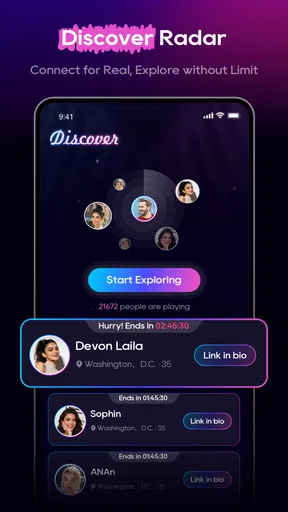
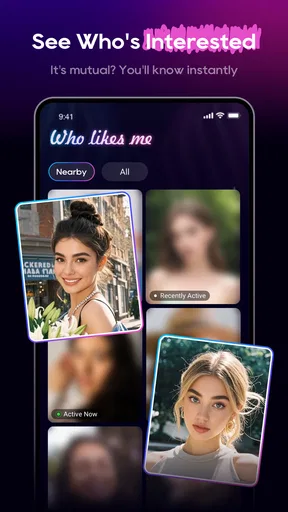
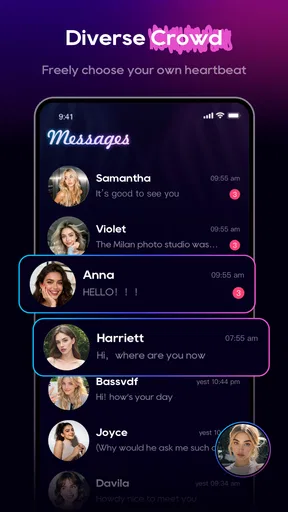
The strongest part of Bold is its sense of immediacy. The central idea is easy to understand: look around your area, find someone interesting, match when the interest is mutual, and move into conversation. I appreciate that the path from discovery to chat is short. There is less temptation to treat the app as something to browse passively for half an hour.
A realistic use case is someone who has recently moved to a new neighborhood and does not yet have a social circle. Instead of searching through a huge national pool, that person can use Bold with a more local mindset: find nearby people, exchange a few messages, and decide whether a low-pressure coffee or walk makes sense. The same approach can suit someone who prefers meeting people in the same city rather than maintaining a connection that is unlikely to become practical.
That local focus is also the app’s clearest point of difference from conventional social networks. A large social platform is useful for following interests, watching updates, and keeping up with people you already know. Bold is more purposeful. It asks what kind of connection you want to make now, then keeps discovery and conversation close together. Compared with a traditional dating app, the experience feels less dependent on building a long profile before anything happens, although users who want detailed compatibility tools may find the approach too streamlined.
I found the match-to-chat transition especially important. Many apps make matching feel like the finish line, but a match is only useful if it leads to a comfortable conversation. Bold’s value depends on how quickly you turn that opening into something specific. A simple message about a shared interest or a nearby activity is more productive than a vague greeting. My practical advice is to decide what you are hoping to find before opening the app: a date, a new local contact, or a broader social connection. That small bit of clarity makes the discovery process less random.
The app has earned a 4.7 average from around two thousand ratings, and its store presence shows over ten thousand installs. I would not treat those figures as proof that every conversation will be excellent, but they do suggest that Bold has attracted a meaningful early audience. The relatively focused scale can be appealing if you dislike feeling lost in a massive platform, though it may also mean that the quality of your experience depends heavily on the activity in your own area.
Why the short route to conversation matters
The design concept is strongest for people who dislike excessive setup. If you have ever spent time answering long questionnaires only to receive a few weak recommendations, Bold’s simpler rhythm can feel refreshing. You can concentrate on the immediate question: does this person seem worth talking to?
There is a useful trade-off here. A shorter path reduces friction, but it also places more responsibility on the user. You need to read profiles carefully, ask sensible questions, and notice whether the other person communicates respectfully. The app can help create an opening; it cannot replace judgment. I would not rush from a match to an in-person meeting simply because the person is nearby.
One practical workflow is to use the first conversation as a screening step rather than as a commitment. I would look for consistent replies, clear intentions, and a willingness to suggest a public meeting place if the chat goes well. If a conversation becomes pushy, vague, or uncomfortable, the local nature of the app is not a reason to continue. In fact, knowing that someone may be close by makes privacy and boundaries more important.
Where Bold is more useful than a normal social feed
Bold makes more sense when your goal is active discovery. A normal social feed can show you people nearby, but usually only through shared contacts, public posts, or interest groups. That is helpful when you want community discussion, yet it is not designed around the moment when two strangers decide to talk.
For example, a person who wants to meet people after relocating for work may not want to broadcast a public post saying they are available to socialize. A focused matching app offers a more direct setting. Likewise, someone who prefers a local date over weeks of long-distance messaging may appreciate the emphasis on proximity.
Still, Bold is not automatically better than every alternative. If your priority is professional networking, a career-focused platform is more appropriate. If you want structured group activities, an event or hobby app may produce more natural meetings. If you want extensive filters, personality analysis, or a large international pool, a more established dating service may suit you better. Bold’s appeal comes from its direct local purpose, not from trying to cover every kind of relationship or community activity.
The meaningful weakness: local availability can shape the whole experience
The main limitation is built into the concept. A local discovery app is only as satisfying as the people available around you. In a dense city, you may find enough variety to keep browsing useful. In a smaller town, the pool may feel narrow, and repeated profiles or quiet periods can make the app feel less active than its overall audience figures suggest.
This is not a flaw that a clever interface can completely solve. A nearby match is valuable because meeting is realistic, but the same location filter reduces the number of possibilities. I would give Bold a fair trial during different times of day before deciding whether it suits you. If your area produces little activity, switching between several similar apps may be more effective than relying on one service alone.
Another point to consider is the difference between a free download and a completely free experience. Bold can be installed without an upfront charge, but in-app purchases range from $14.99 to $299.99 per item. That is a wide range, so I would inspect any purchase screen carefully and avoid paying simply because I feel pressure to improve a slow result. A paid option may be worthwhile for someone who already sees promising local activity, but it is harder to justify when the nearby pool is limited.
My advice is to use the free starting experience to answer one question first: are there enough interesting, respectful people in my area for this app to be useful? If the answer is no, spending more is unlikely to solve the underlying problem. If the answer is yes, then a purchase becomes a personal decision based on convenience rather than hope.
Small habits that make the app more effective
Because Bold moves quickly from discovery to chat, the quality of your opening message matters more than it might on a slower platform. I would avoid sending the same line to everyone. Mentioning a visible interest or asking a simple local question gives the other person something real to answer. It also helps you identify quickly whether the match is genuine or merely passive.
A second useful habit is to keep the first exchange short enough to remain comfortable. You do not need to share your workplace, exact home area, or daily routine to establish common ground. Broad references such as a neighborhood, public venue, or general activity are safer than precise location details. If someone insists on personal information before trust has developed, I would treat that as a warning sign.
A third trade-off is timing. The app’s local emphasis can encourage users to move too fast because meeting seems convenient. I think the better workflow is gradual: discover, chat, verify consistency, then consider a public meeting. Tell a friend where you are going, arrange your own transport, and choose a place where leaving is easy. These are not reasons to avoid Bold; they are sensible boundaries for any app that connects nearby strangers.
I would also keep expectations realistic. A match is not a promise of chemistry, and a quick reply is not necessarily evidence of serious intentions. The app is most useful when you treat it as a tool for creating opportunities rather than as a system that guarantees a relationship. That mindset prevents the local format from becoming emotionally exhausting.
Who should try it, and who should skip it
Bold is a good match for adults who want nearby connections and prefer a direct route into conversation. It is particularly suitable for people who have recently moved, want to expand their local social life, or would rather meet someone in the same area than maintain an online-only connection. It may also appeal to users who find large social platforms distracting and want a more focused purpose.
I would recommend it cautiously to someone who is comfortable making the first move. The app can present an opportunity, but users still need to write messages, judge compatibility, and handle rejection without taking every inactive match personally. People who enjoy a quick, conversational style will probably get more from it than those who want a highly guided matchmaking process.
On the other hand, I would skip Bold if you are looking for a general social network, a professional community, or a structured group-activity service. I would also hesitate if you live in an area with very little local activity and do not want to use more than one app. Users who strongly dislike any form of paid upgrade should pay attention to the in-app purchase range before investing time in the platform.
The mature 17+ rating is another clear boundary. I would not recommend treating Bold as a family-friendly social app, and parents should not assume that its local-chat format is suitable for younger users. Adults should still use the same care they would use on any service designed to connect strangers.
My final verdict on the local connection model
Bold succeeds because it keeps its purpose understandable: nearby discovery followed by matching and chat. In my experience, that focus makes it more useful than a general social feed when the real goal is to meet someone new in your area. The strongest evidence in its favor is not a long list of complicated tools, but the straightforward path from seeing a potential connection to starting a conversation.
Its weaknesses are equally important. Local activity varies by location, a quick match does not guarantee a meaningful exchange, and the free download can lead to optional purchases priced as high as $299.99 per item. I would not pay until I had confirmed that the app has enough suitable people nearby. I would also keep personal details limited and treat the first chat as a screening stage.
For the right person, Bold is best viewed as a focused local introduction tool, not a promise of instant romance or friendship. I would recommend trying it to adults who want nearby conversations, especially after a move or during a period when meeting new people feels difficult. If you want deep compatibility systems, professional networking, or organized group events, another category of app will serve you better. For local-first discovery with a fast route into chat, however, Bold is a credible option worth testing carefully.
Verdict
Strengths of Bold: Local Chat & Date
- No phone number is required to create a local profile.
- Location-based discovery can make nearby connections feel more relevant.
- The concept supports spontaneous chats during events or outings.
- Simple matching may be easier for casual users than traditional dating apps.
- Useful for meeting people with shared local interests and activities.
Limitations of Bold: Local Chat & Date
- The nearby user pool may be small outside busy areas or large cities.
- Location-based features can raise privacy concerns for cautious users.
- Conversations may become inactive when users leave the same area.
- Limited distance can reduce matches when traveling or relocating.
- User safety depends heavily on careful profile and meetup decisions.
Similar Picks in This Category
View All
Meta Platforms, Inc.4.6

Instagram4.0

Likee-Live, Chat & Party Games
Likeme Pte. Ltd.4.4

Facebook Lite
Meta Platforms, Inc.4.5

TikTok - Videos, Shop & LIVE
TikTok Pte. Ltd.4.0

Moj: Free Short Drama & Reels
ShareChat4.1
Frequently Asked Questions
What is Bold: Local Chat & Date, and how does it work?
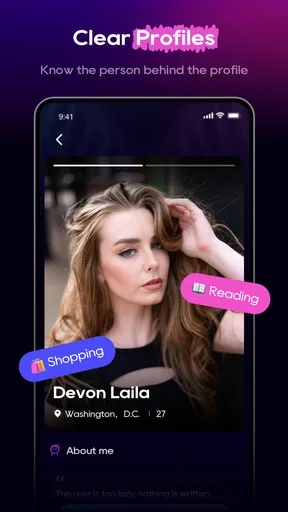
Bold: Local Chat & Date is a social and dating app designed to help you discover and connect with people in your area. After creating a profile, you can browse nearby users, view their photos and interests, and start conversations when there is mutual interest. The local focus makes it useful for meeting people close by, although the quality of results will depend on how many active users are available in your location.
Is Bold: Local Chat & Date free to download and use?
The app can generally be downloaded at no initial cost, but some features may require in-app purchases or a premium subscription. Basic functions, such as creating a profile and exploring potential connections, may be available for free, while enhanced visibility, additional messaging options, or other advanced tools could be restricted. Before subscribing, check the current pricing, renewal terms, and cancellation options shown in the app store.
What information and permissions does Bold: Local Chat & Date require?
Like most location-based dating platforms, Bold may request access to information such as your profile details, photos, approximate location, and device notifications. Location access helps the app display nearby users, while camera or photo permissions may be needed to upload images. Review the privacy policy and your phone’s permission settings carefully, and only provide information you feel comfortable sharing with the service.
Is Bold: Local Chat & Date safe for meeting or chatting with strangers?
The app may include reporting, blocking, and account-management tools, but no dating platform can completely eliminate fake profiles, scams, or inappropriate behavior. Avoid sharing your home address, financial information, passwords, or private documents. Keep early conversations inside the app, be cautious about links and urgent requests, and arrange any first meeting in a busy public place while informing someone you trust.
How can I delete my Bold: Local Chat & Date account?
Account deletion is normally handled through the app’s profile, settings, or account-management section, although the exact menu names may vary by version. Deleting the app from your phone does not necessarily remove your profile or cancel a paid subscription. If you use premium features, cancel the subscription through Google Play or the Apple App Store separately, then confirm that your account and personal data have been removed.
